
Similar Articles: world series game 4 49ers Federal government shutdown iTunes National Cheeseburger Day
This story first appeared in the Nov. 8 issue of The Hollywood Reporter magazine.
Huddled together just before the first of this year's awards-season roundtables got underway at the historic Mack Sennett Studios in Silver Lake, the six invited actors were eager to discuss one thing: Christopher Nolan. "Is he a big guy?" one of the participants asked Matthew McConaughey, who was taking a break from shooting the director's Interstellar on the Sony lot. Queried another, "Does he talk a lot?" McConaughey, 43, demurred as he joked with his Dallas Buyers Club co-star Jared Leto, 41, who had flown in the night before from Michigan, where he performed with his band 30 Seconds to Mars. The duo joined Josh Brolin, 45, Jake Gyllenhaal, 32, Michael B. Jordan, 26, and Forest Whitaker, 52, in a candid discussion about everything from flubbed auditions to Brazilian waxing.
PHOTOS: Awards Roundtable: 6 Actors on Mistakes, Sacrifices, and Strange Auditions
Let's start with a question about reinvention. How do you not get stale?
JARED LETO: Panic. Desperation.
JAKE GYLLENHAAL: Bills.
JOSH BROLIN: Fear -- there's always fear. You re-create yourself in every movie, don't you?
FOREST WHITAKER: There's a good fear, and there's a negative fear. There's a thing you confront when you're going into something new and you come to this sort of abyss, and then you push yourself. It makes you try different things.
MATTHEW MCCONAUGHEY: You mentioned two types of fear, and the one that's good is when you're scared. You don't know what's on the other side, but you're like: "I'm gonna dive in. I know there's something there; I don't know how to define it yet. I don't know the equation, but I'm gonna come up and I'll understand it." It takes you to the cliff, and you should be scared because the cliff drops, and you don't have a net.
BROLIN: I've never had that feeling in any movie where I actually feel like I'm nailing it.
WHITAKER: You don't feel the magic of it once in a while?
BROLIN: Never ever.
LETO: I get a terminal dissatisfaction on films. If I was bad in one scene, it's impossible to let go. And it can make or break my day. If I drank, I would probably drink a lot.
Q&A: Forest Whitaker on Evading Oscar's Curse, Rediscovering the Magic on 'The Butler'
Have you ever said no to something because you're afraid?
LETO: Oh yeah. I've talked myself out of auditions a hundred times. I auditioned for [Robert] De Niro seven times, years and years ago. I remember auditioning for Terrence Malick, and the casting director upended a couch, and we were supposed to hide behind it and shoot imaginary guns! [Laughter.] In that audition, I literally stood up, took a few imaginary bullets and shoved [the casting director]. I said: "I can't do this. This is like a bad high school play," and I walked out. And then Terrence called me -- you guys I'm sure have met him; he's the most gentle and amazing guy in the world -- and he's like: "Uh, Jared? I'd love you to be in my film."
Have you ever thought of quitting?
LETO: I did for six years, almost.
BROLIN: Six years you didn't work? Wow.
GYLLENHAAL: [Smiles.] It's only appropriate as an indulgent actor to think about quitting 'cause it's such an intense job.
WHITAKER: It takes a lot from you.
LETO: I was focusing on other passions, and time kind of flew by. But it can be heartbreaking. You make these little movies -- most of the time they don't work.
BROLIN: That goes back to what we were saying about feeling like you're [not] really nailing something. I remember [1996's] Flirting With Disaster -- I did the movie and never felt like we were nailing it at all. And then I saw the movie …
GYLLENHAAL: You killed that movie!
MICHAEL B. JORDAN: Exactly. Exactly.
STORY: Matthew McConaughey: Why I Rejected a $15 Million Paycheck
Matthew, what went into your reinvention? I think you turned down $15 million for a Magnum, P.I. movie.
MCCONAUGHEY: I heard that number. I don't think I ever saw that in the offer.
BROLIN: Makes for a better story.
MCCONAUGHEY: Let me just throw this at you: That same script with that number really is a whole lot funnier than [when they gave it to] me.
So not quite true?
MCCONAUGHEY No, it may be true. [Smiles.]

Illustrations show improved air traffic management; 4c x 6 inches; 195.7 mm x 152 mm;
Illustrations show improved air traffic management; 4c x 6 inches; 195.7 mm x 152 mm;
WASHINGTON (AP) — Ten years after Congress gave the go-ahead to modernize the nation's air traffic control system, one of the government's most ambitious and complex technology programs is in trouble.
The Next Generation Air Transportation System, or NextGen, was promoted as a way to accommodate an anticipated surge in air travel, reduce fuel consumption and improve safety and efficiency. By shifting from radar-based navigation and radio communications — technologies rooted in the first half of the 20th century — to satellite-based navigation and digital communications, it would handle three times as many planes with half as many air traffic controllers by 2025, the Federal Aviation Administration promised.
Planes would fly directly to their destinations using GPS technology instead of following indirect routes to stay within the range of ground stations. They would continually broadcast their exact positions, not only to air traffic controllers, but to other similarly equipped aircraft. For the first time, pilots would be able to see on cockpit displays where they were in relation to other planes. That would enable planes to safely fly closer together, and even shift some of the responsibility for maintaining a safe separation of planes from controllers to pilots.
But almost nothing has happened as FAA officials anticipated.
Increasing capacity is no longer as urgent as it once seemed. The 1 billion passengers a year the FAA predicted by 2014 has now been shoved back to 2027. Air traffic operations — takeoffs, landings and other procedures — are down 26 percent from their peak in 2000, although chronic congestion at some large airports can slow flights across the country.
Difficulties have cropped up at almost every turn, from new landing procedures that were impossible for some planes to fly to aircraft-tracking software that misidentified planes. Key initiatives are experiencing delays and are at risk of cost overruns. And the agency still lacks "an executable plan" for bringing NextGen fully online, according to a government watchdog.
"In the early stages, the message seemed to be that NextGen implementation was going to be pretty easy: You're going to flip a switch, you're going to get NextGen, we're going to get capacity gains," said Christopher Oswald, vice president for safety and regulatory affairs at Airports Council International-North America. "It wasn't realistically presented."
Some airline officials, frustrated that they haven't seen promised money-saving benefits, say they want better results before they spend more to equip planes to use NextGen, a step vital to its success.
Lawmakers, too, are frustrated. NextGen has enjoyed broad bipartisan support in Congress, but with the government facing another round of automatic spending cuts, supporters fear the program will be increasingly starved for money.
"It's hard not to be worried about NextGen funding ... because it's a future system," said Marion Blakey, who was the head of the FAA when the program was authorized by Congress in 2003 and now leads a trade association that includes NextGen contractors. "There is a temptation to say the priority is keeping the existing systems humming and we'll just postpone NextGen."
In September, a government-industry advisory committee recommended that, given the likelihood of budget cuts, the FAA should concentrate on just 11 NextGen initiatives that are ready or nearly ready to come online. It said the rest of the 150 initiatives that fall under NextGen can wait.
"You can't have an infrastructure project that is the equivalent of what the (interstate) highway program was back in the '50s and the '60s and take this ad hoc, hodgepodge approach to moving this thing forward," said Air Line Pilots Association First Vice President Sean Cassidy, who helped draft the recommendations.
The threat of funding cuts comes just as NextGen is nearing a tipping point where economic and other benefits should start to multiply if only the FAA and industry would persevere, said Alaska Airlines Chairman Bill Ayers, a supporter.
Responding to industry complaints, the FAA has zeroed in on an element of NextGen that promises near-term benefits: new procedures that save time and fuel in landings while decreasing greenhouse gas emissions. Planes equipped with highly calibrated GPS navigation are able fly precise, continuous descents on low power all the way to the runway rather than the customary and time-consuming stair-step approaches in which pilots repeatedly decrease power to descend and then increase power to level off.
Last spring, Seattle-Tacoma International Airport became the first large airport where airlines can consistently use one of the new procedures. Known as HAWKS, the procedure shortens the approach from the southwest by about 42 miles. Multiplied over many planes every day it adds to up to significant savings, an enticing prospect for airlines, which typically operate on razor-thin profit margins.
Alaska, with a major hub in Seattle, estimates new procedures there will eventually cut the airline's fuel consumption by 2.1 million gallons annually and reduce carbon emissions by 24,250 tons, the equivalent of taking 4,100 cars off the road every year. Fuel is the biggest expense for most airlines.
In Atlanta, more precise navigation procedures have increased the number of departure paths that planes can fly at the same time, enabling takeoffs to double from one every two minutes to one every minute. That has freed up an additional runway for arrivals, said Dale Wright, the National Air Traffic Controllers Association's safety and technology director.
FAA Administrator Michael Huerta says NextGen is on track despite the troubles.
"It's a significant transformation that we're making," he told The Associated Press. "I would hope it would be moving faster as well, but we have a very large, a very complex system, and we're making great progress."
But even use of the GPS-based procedures has been slowed by unforeseen problems. It takes several years to develop each procedure airport by airport. At large airports, new procedures are used only sporadically. During busy periods, controllers don't have time to switch back and forth between the new procedures, which most airliners can use, and older procedures that regional airliners and smaller planes often must still use. Consequently, older procedures are used because all planes can fly them.
At six large airports in Chicago, New York and Washington, only 3 percent of eligible flights have used the new procedures, Calvin Scovel, the Transportation Department's inspector general, told a congressional hearing in July. Many other NextGen initiatives "are still in the early stages of development," he said.
Another important NextGen initiative would replace radio communications between controllers and pilots with text messaging and digital downloads. Radio frequencies are often crowded, and information sometimes must be repeated because of mistakes or words not heard. Digital communications are expected to be safer and more efficient.
But airlines are reluctant to make additional investments in new communications equipment for planes until the FAA shows NextGen can deliver greater benefits like fuel savings from more precise procedures, said Dan Elwell, a senior vice president at Airlines for America, a trade association for major carriers.
Southwest Airlines spent more than $100 million in 2007 to equip its planes to use the new procedures. The airline expected to recoup its investment by 2011, but is still not there, primarily because of the FAA's slow pace, said Rick Dalton, Southwest's director of air space and flow management.
NextGen was originally forecast to cost $40 billion, split between government and industry, and to be completed by 2025. But an internal FAA report estimates it will cost three times that much and take 10 years longer to complete, Scovel said. FAA officials have largely stopped talking about end dates and completion costs as the technologies that make up NextGen continue to evolve. The agency currently spends about $800 million a year on the program.
"When we're talking about NextGen, it's like we're talking about the atmosphere," Cassidy said. "It's tough to pin down exactly what NextGen is in terms of the technologies and the cost of the technologies because, frankly, they're changing all the time."
Hopefully the FAA can make a "mid-course correction" to get NextGen on track, said Rep. Rick Larsen, D-Wash., a supporter. "We shouldn't give up on the effort because I think everybody understands there is a lot of benefit to it."
But he's concerned that more delays in the program "could force us to rename it LastGen."
___
Follow Joan Lowy on Twitter at http://www.twitter.com/AP_Joan_Lowy
Associated PressSource: http://hosted2.ap.org/APDEFAULT/89ae8247abe8493fae24405546e9a1aa/Article_2013-10-31-Air%20Traffic%20Future/id-db4f37419d0e4008b246910f0f0ad8a5SYDNEY (AP) — China and Southeast Asian governments demanded an explanation from the U.S. and its allies on Thursday following media reports that American and Australian embassies in the region were being used as hubs for Washington's secret electronic data collection program.
The reports come amid an international outcry over allegations the U.S. has spied on the telephone communications of as many as 35 foreign leaders.
A document from National Security Agency leaker Edward Snowden, published this week by German magazine Der Spiegel, describes a signals intelligence program called "Stateroom" in which U.S., British, Australian and Canadian embassies secretly house surveillance equipment to collect electronic communications. Those countries, along with New Zealand, have an intelligence-sharing agreement known as "Five Eyes."
"China is severely concerned about the reports, and demands a clarification and explanation," Chinese Foreign Ministry spokeswoman Hua Chunying said.
Australia's Fairfax media reported Thursday that the Australian embassies involved are in Jakarta, Bangkok, Hanoi, Beijing and Dili in East Timor; and High Commissions in Kuala Lumpur and Port Moresby, Papua New Guinea. The Fairfax report, based on the Der Spiegel document and an interview with an anonymous former intelligence officer, said those embassies are being used to intercept phone calls and internet data across Asia.
In a statement, Indonesia's Foreign Minister Marty Natalegawa said his government "cannot accept and strongly protests the news of the existence of wiretapping facilities at the U.S. Embassy in Jakarta."
"It should be emphasized that if confirmed, such action is not only a breach of security, but also a serious breach of diplomatic norms and ethics, and certainly not in tune with the spirit of friendly relations between nations," he said.
The Snowden document said the surveillance equipment is concealed, including antennas that are "sometimes hidden in false architectural features or roof maintenance sheds."
Des Ball, a top Australian intelligence expert, told The Associated Press he had personally seen covert antennas in five of the embassies named in the Fairfax report.
He declined to go into further detail or specify which embassies those were. But Ball said what Der Spiegel has revealed is hardly surprising or uncommon. Many countries have routinely used embassies as bases to covertly listen in on phone calls, and reports of such surveillance have been public for decades, he said.
"We use embassies to pick up stuff that we can't pick up from ground stations here in Australia — and lots of countries do that," said Ball, a professor with the Australian National University's Strategic and Defence Studies Centre.
According to the Snowden document, the spying sites are small in size and staff. "They are covert, and their true mission is not known by the majority of the diplomatic staff at the facility where they are assigned," it said.
The Department of Foreign Affairs and Trade declined to comment on the reports. Australian Prime Minister Tony Abbott said only that the government had not broken any laws.
"Every Australian governmental agency, every Australian official, at home and abroad, operates in accordance with the law," Abbott told reporters. "And that's the assurance that I can give people."
Still, there was predictable outrage in the countries named in the document.
Malaysian Home Minister Ahmad Zahid Hamidi said his government viewed the allegations as a serious matter and would investigate whether the U.S. Embassy in Kuala Lumpur was being used for spying. The country's opposition party issued a statement Thursday urging the Malaysian government to lodge a protest with both the U.S. and Australian embassies.
Thailand's National Security Council Secretary-General, Lt. Gen. Paradorn Pattanathabutr, said the government told the U.S. that spying was a crime under Thai laws, and that Thailand would not cooperate if asked to help eavesdrop.
Asked about the Australian embassy allegations, he said Australians are not capable of doing such sophisticated surveillance work.
"When it comes to technology and mechanics, the U.S. is more resourceful and more advanced than Australia," he said. "So I can say that it is not true that the Australian embassy will be used as a communications hub for spying."
___
Associated Press writers Thanyarat Doksone in Bangkok, Niniek Karmini in Jakarta, Sean Yoong in Kuala Lumpur and researcher Zhao Liang in Beijing contributed to this report.
Associated PressSource: http://hosted2.ap.org/APDEFAULT/3d281c11a96b4ad082fe88aa0db04305/Article_2013-10-31-AS-Asia-US-Spying/id-ae79c6542bab487283e333970339d551
2013 iPad guide: How to choose between O2, Vodafone, Three and EE, and a popular MVNO alternative.
If you're in the UK with eyes on a new cellular iPad Air or Retina iPad mini, the decision on which carrier to go with is more difficult than ever. This time around 4G LTE is a factor, with three of the four big carriers having recently flipped the switch, with one more to come before the end of the year. As such, getting the most bang for your buck while accessing this superfast mobile data on your new iPad is likely top of the agenda. But it doesn't end there.
Let's take a look at what's on offer from the big four.
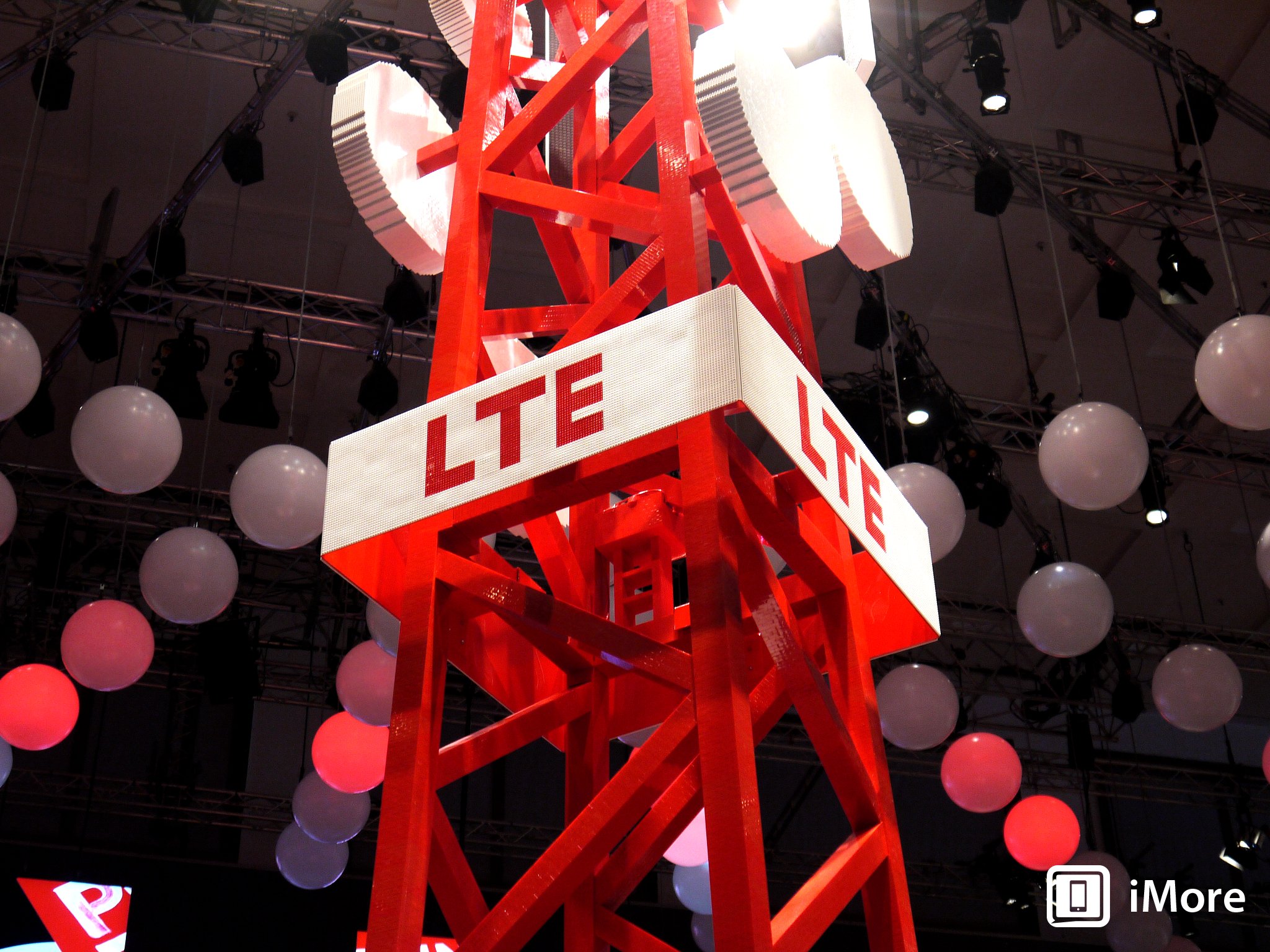
As with the recent iPhone 5s and iPhone 5c launch, 4G LTE is the hot property in deciding where to go with your devices. If you want LTE out of the box, then Three can be discounted immediately. Three will be getting it, but not until December when the rollout will finally begin. That said, Three is notorious for offering great value for money on data allowances, and the HSPA+ offered currently will in places match the LTE offered by rival carriers for download speed.
O2 and Vodafone are still in the early stages of their respective rollouts, so for anyone serious about 4G right now, EE is the best looking option. Of the big four carriers, only O2 at the moment seems to have no plans to offer the iPad Air at launch. No pricing for subsidized models is available at the time of writing, but we'll update as and when that information becomes available.

Perhaps not something that immediately springs to mind, but beyond the main four carriers there is still chance to get some data for your new iPad Air. Probably the most popular – and worth considering – is GiffGaff. And, while the selection of plans is limited, there's still a chance to get a decent bucket of data for not a lot of money. And, since it runs on the O2 network, the signal should be pretty good.
The best option for prospective iPad Air buyers is the £12.50 per month 'Gigabag,' which offers 3GB of mobile data. There are options at 500MB and 1GB for £5 and £7.50 per month respectively, but for not a lot more cash you get a decent extra chunk of data. If you're buying your new iPad from Apple, this option is absolutely worth considering.
The only real drawback; in the event of issues, you won't have as easy access to customer service as you would with the major carriers. GiffGaff has a big community focus, but the lack of high street stores could deter many.
Beyond just thinking about the financial side, there's coverage to take into account. After all, there's little point paying out if you're not going to be getting what you're paying for. Generally the big four all have excellent coverage nationwide, with the usual blackspots to be expected. The best thing to do is to check out the coverage maps at the links below for each of them.
If you don't mind waiting for LTE, Three is well worth a look. The HSPA+ offered by Three is more than competitive in terms of download speeds when compared to LTE enabled competitors, and is definitely to be considered by the data hungry iPad owner.
Anyone who wants LTE, in more locations, now. EE has more coverage than the other LTE enabled carriers by far, and has even started rolling out double-speed data in certain locations such as London and Birmingham. The network that came together as a combined effort of Orange and T-Mobile has solid signal over most of the UK, and also has a decent reputation for working indoors.
At this point, the strongest argument is that if the signal in your area is strongest on Vodafone, then go with them. Their LTE offering is still in its infancy, and Vodafone traditionally hasn't been as price competitive as some of the other carriers. Long serving customers and folks who enjoy the best signal are best suited to Vodafone.
As with Vodafone, O2 has a 4G LTE network currently in its infancy. The good news is that the spectrum used for it will work better indoors, so as it rolls out that might be something to consider. The main issue currently is that O2 has no apparent plans to sell subsidized iPads, so this one is strictly for those buying from Apple. For now.
If you're still not sure about which UK carrier to get for your iPad Air or iPad mini jump into our iPad discussion forums and the best community in mobile will happily help you out, or hey, maybe Wi-Fi-only is good enough for you. Let know in the comments - which one did you go with and why?

     |
Quinton "Rampage" Jackson will be returning to action after all. Just not against the opponent everyone was expecting.
Four days after his planned pay-per-view bout against Tito Ortiz fell out due to an Ortiz neck injury, Bellator announced a new fight for the former UFC light heavyweight champion. Jackson will fight Joey Beltran in the main event of Bellator's Nov. 15 card in Atlantic City, N.J.
"I want to thank Joey Beltran for stepping up for the fight so I can get my first Bellator victory out of the way," Jackson said. "He'll have the unfortunate honor of taking the ass whooping I was going to give Tito. My body is in incredible shape right now. I feel like I did in PRIDE, and Joey Beltran is the right guy to put on an exciting fight and showcase what I've been working on."
Jackson (32-11) signed with Bellator amid much fanfare this spring. He carries a three-fight losing streak into his Bellator debut, with his last bout a unanimous-decision loss to Glover Teixeira at UFC on FOX 6 on Jan. 26.
Beltran (14-9, 1 NC), meanwhile, was recently cut by the UFC. The Alliance MMA slugger known as "The Mexicutioner" lost a split decision to Fabio Maldonado in Brazil on Oct. 9. That was his fourth loss in his past six fights. A 2012 victory over Igor Pokrajac was overturned when Beltran failed a steroid test.
"Getting the chance to fight Rampage is just a tremendous opportunity," Beltran said. "This is my Rocky Balboa moment. A win against one of the best and well known fighters in the world would be an incredible accomplishment, and I'm not taking it lightly. Rampage better be prepared and ready for this fight. I'm prepared to go through hell during this fight. There will be blood. Someone is going to get hurt. This is my home now, and I don't want to go anywhere. It's Rampage first, then a Bellator light heavyweight tournament, and then onto the title."
BUFFALO, N.Y. (AP) — A bus driver is being hailed as a hero for preventing a woman from jumping off a Buffalo highway overpass.
About 20 McKinley High School students had just stepped aboard Darnell Barton's Metro bus Oct. 18 when he spotted a woman who had climbed over a guardrail and stood leaning over the afternoon traffic zipping along the Scajaquada Expressway below.
With cars and an occasional pedestrian continuing to pass by her, Barton wasn't sure at first that the woman was in distress.
He stopped his bus, opened the door and asked if she needed help, at that moment conflicted between the rules of his job, which required him to call his dispatcher, and his training as a former volunteer firefighter and member of the Buffalo Special Police, which told him that if he made contact, he shouldn't break it.
"It was an interesting situation, knowing what you know and knowing what you have to do," he said by phone Wednesday. "Dispatch picked up. I remember giving my location and saying, 'Send the authorities, this young lady needs help' and then dashing the phone down."
The bus video system captures Barton, 37, leaving the bus and the 20-something woman looking back at him. Her gaze then returns to the traffic below.
"That's when I went and put my arms around her," said Barton, a father of two. "I felt like if she looked down at that traffic one more time it might be it."
With the woman in a bear hug, Barton asked if she wanted to come back over the rail. She hadn't spoken up to that point but said yes.
The video shows Barton tenderly helping her climb back over the guardrail and sit down. Then he sits next to her on the concrete. He asked her name and other questions to distract her, he said, learning she was a student.
"Then she said, 'You smell good,'" he said.
A corrections officer and a female driver who'd been behind the bus came to help, speaking to the woman until police and an ambulance arrived.
"While I was holding her, listening to their questions, I just prayed," the bus driver said. "Whatever was on her mind, it had her. It really, really had her."
When the ambulance drove away, Barton got back on his bus — and received a standing ovation from the high school students and other passengers who'd been watching through the windows. He finished his route, wrote up a report and went home.
"Being the humble individual that Darnell is, he didn't write it in a way that was going to call attention to himself," said C. Douglas Hartmayer, spokesman for the Niagara Frontier Transportation Authority. "It was: I did it, got back on my bus and continued. That speaks volumes about his demeanor and character."
Barton wishes he could speak with the woman again to make sure she's OK.
"Things like this put what's important in perspective," he said. "You hug your kids a little tighter, kiss your wife a little bit longer. You're grateful.
"Things may not be perfect," he said, "but as we say, they're a little bit of all right."
Source: http://news.yahoo.com/ny-bus-driver-saves-woman-jumping-off-bridge-194128546.html
So this is completely terrifying. In a you will probably pee a little bit as you watch this GIF kind of way. In a holy crap wait a minute this isn't a video game right kind of way. No, no it is not. This is what it looks like to take a direct hit from a tank shell in real life. You can see it blast out of the barrel and head straight for your face.

| |
She's been promoting the heck out of it for weeks before it hits stores, and it looks like all of her hard work paid off as Katy Perry's PRISM debuted at No. 1 on the Billboard 200.
In addition to her top spot, the 29-year-old pop star also set a record for the largest sales week for a female artist in the U.S. in 2013.
According to Nielsen SoundScan, over 286,000 copies were sold in its first release in the country, giving the "Roar" singer a personal best as well as beating out Miley Cyrus.
Meanwhile, Katy is taking her show on the road and is currently in Japan, tweeting on Tuesday, "Finally! I'm in my HAPPY place! KONNICHIWA," followed by, "...AND it's national CAT day."
Welcome to SymboGen, your friendly neighborhood medical company; have you stopped by for your tapeworm implant? Fair warning: There have been some unusual side effects ...
Health care has swallowed American headlines in recent years; besides the arguments over who deserves treatment to begin with, issues are emerging in pharmaceutical brand ethics, anti-vaccination activism, and the overuse of antibiotics. The war against disease is spreading against the smallest enemies of all.
In Parasite, Mira Grant imagines a near future in which genetically modified tapeworms are a universal health-care solution. Once implanted, the worm provides immune-system support, making its human host healthy for the duration of its life — though like any good piece of commodified progress, the worms have planned obsolescence and need to be replaced regularly.
Sal Mitchell owes her life to her parasite, which brought her out of a coma after a serious car accident. Unfortunately, her memories vanished, and her current personality is only 6 years old. She lives a life that's half lab rat and half surreal puberty, living at home, dating a doctor (though not one of hers), and relearning language and social idiosyncracies in a treading-water existence. Something's got to give — and does; people start contracting a bizarre sleepwalking sickness just as Sal starts getting cryptic messages about what she already suspects. This pandemic is no accident.
Though technobabble trips off everyone's tongues, Grant is most interested in the ethical implications of that technology, so advanced it really is indistinguishable from magic. She presents government and corporations not as monoliths, but as flawed systems whose participants are only as trustworthy or greedy as the individual in question. Those individual personalities are revealed in interludes (such as an interview with SymboGen's co-founder and the notes of their vanished head scientist) that suggest public perception as the true arena in which wars are fought — though they offer diminishing returns as the story unfolds.
Mira Grant's previous books include the Hugo Award-nominated Newsflesh series.
Mira Grant's previous books include the Hugo Award-nominated Newsflesh series.
But as the first of a series, Parasite often feels like groundwork: characters are dutifully introduced, horrors steadily unrolled, and ethical arguments sedately hashed out, so that even increasingly frequent zombie outbreaks can't stir up real urgency. An Everyperson can be a compelling center for a conspiracy story — but Sal's so slow on the uptake that we figure out plot twists far ahead of her. The suspense often stretches thin, and some of the most promising thematic parallels fizzle out in service of the plot. (It's telling that of the many horrors Sal faces, her tipping point comes when her parents ground her; it suggests a parallel with the parent state medical technology has become, but the full impact of the setup gets pushed aside by another burst of action.) And though it's a refreshing change for a thriller heroine to have a trustworthy boyfriend, many others in the supporting cast — the awkward family, the stalwart dog, the mysterious CEO, the mysterious scientist, the quirky girl — never quite come into focus.
Parasite succeeds most in capturing the frustration and administrative dread that's part and parcel of recovering from a traumatic medical incident. Being exposed to a zombie pandemic seems less dangerous to Sal than having to undergo the subsequent poking and prodding by indifferent doctors; it's a well-grounded medical wariness that gets at the heart of what the Parasitology series will be asking: What happens when the cure is worse than the disease?
These days, pedestrians tapping away while walking are hard to miss.
These days, pedestrians tapping away while walking are hard to miss.
We've all grumbled about the growing ranks of phone-gazing zombies, drifting along the sidewalk or holding up the checkout line. Texting while walking, distracted walking, the smartphone sidewalk scourge — whatever you call it, this phenomenon has rapidly become a nearly inescapable frustration of modern life.
Oliver Burkeman over at The Guardian has had enough. He missed a subway train on Friday, he writes, when the woman in front of him on the stairs "drifted placidly to a standstill ... distracted by something on her smartphone."
As Burkeman notes (as have our friends over at Shots), these head-down meanderers aren't just annoying. They're also at risk of hurting themselves by walking into crosswalks without looking both ways and lingering as they cross — never mind stumbling off curbs, running into parking meters and knocking into other pedestrians.
To that last point, Burkeman laments what he (and surely many of us) have observed as a shift in sidewalk etiquette: Whether consciously or not, distracted walkers now assume that it's the responsibility of other pedestrians to make way for them, not the other way around.
And to nip this development in the bud, he proposes a "simple, legal, non-aggressive act of resistance," namely, refusing to play along.
"Next time you're implicitly required to alter your path to avoid colliding with an oblivious phone user ... just don't, and see what happens ...
"And just to be clear, you must still dodge people if you get within a few feet: we're trying to prevent accidents here, not cause them (or start fights). But based on my experiments so far, you'll never get that close. Distracted walkers aren't completely unaware of their surroundings, after all. It's just that their range of awareness is smaller. Once you finally impinge upon it, they'll look up, steer around you, and walk on, ever so slightly conditioned to pay more attention next time."
I'm not entirely innocent here, myself. And plenty of you may be guilty, too. Perhaps, at a time when almost 60 percent of American adults own a smartphone, Burkeman is fighting a losing battle.
But tell us what you think — for the distracted walkers among you, would a few near-collisions convince you to put down your phone? For the rest of you, would you dare try it? Or will this approach just tick up sidewalk frustration for everyone? Let us know in the comments.
Taking a break from her demanding promotional schedule, Miley Cyrus went for a drive with a friend in Studio City, California on Tuesday (October 29).
The “Wrecking Ball” songstress definitely seemed a little out of it as she occupied the passenger seat of her pal’s ride, stopping to quickly take a photo with a fan who had tracked her down.
And while she’s received all kinds of feedback for her newfound penchant for flashing flesh, Cyrus told VEVO that she’s not sure what all the fuss is about.
"For me, nudity has never been something that I've ever tripped about. I don't really see it the way everyone else sees it. I'd rather be naked in front of people than cry in front of people because I don't like showing weakness and that shows a lot of vulnerabilities."
Canadian astronaut Chris Hadfield has spent a total of six months in space. In his new book, he writes that getting to space took only "8 minutes and 42 seconds. Give or take a few thousand days of training."
Canadian astronaut Chris Hadfield has spent a total of six months in space. In his new book, he writes that getting to space took only "8 minutes and 42 seconds. Give or take a few thousand days of training."
While floating weightless in the International Space Station last spring, Commander Chris Hadfield recorded his own version of David Bowie's "Space Oddity" — a video that's now been viewed more than 18 million times on YouTube. But when he wasn't busy being an Internet phenomenon, the Canadian astronaut was witnessing awe-inspiring beauty, facing life-threatening dangers and, at times, holding onto a spaceship orbiting Earth at 17,500 miles an hour.
Hadfield has flown three space missions, conducted two space walks and spent a total of six months in space. On Earth, he's been the chief of international space station operations in Houston and chief CAPCOM commander — the person at mission control who communicates directly with astronauts in orbit. In a new book, An Astronaut's Guide to Life on Earth, he shares some of the lessons he learned in space.
"There are no wishy-washy astronauts," Hadfield tells Fresh Air's Terry Gross. "You don't get up there by being uncaring and blase. And whatever gave you the sense of tenacity and purpose to get that far in life is absolutely reaffirmed and deepened by the experience itself."
On what it's like to do a spacewalk
I've been so lucky to have done two spacewalks. If you looked at your wristwatch I was outside for about 15 hours, which is about 10 times around the world. ...
The contrast of your body and your mind inside ... essentially a one-person spaceship, which is your spacesuit, where you're holding on for dear life to the shuttle or the station with one hand, and you are inexplicably in between what is just a pouring glory of the world roaring by, silently next to you — just the kaleidoscope of it, it takes up your whole mind. It's like the most beautiful thing you've ever seen just screaming at you on the right side, and when you look left, it's the whole bottomless black of the universe and it goes in all directions. It's like a huge yawning endlessness on your left side and you're in between those two things and trying to rationalize it to yourself and trying to get some work done.
On doing a spacewalk amid Southern Lights
I was coming across the Indian Ocean in the dark. I was riding on the end of the robot arm ... [and] I thought, "I want to look at Australia in the dark," because everyone lives along the coast, starting with Perth and across and it's like a necklace of cities. So I shut off my lights, and I let my eyes completely adjust to the darkness, but as we came south under Australia instead of seeing just the lights of the cities of Australia we flew into the Southern Lights. Just like the Northern Lights they erupt out of the world and it's almost as if someone has put on this huge fantastic laser light show for thousands of miles. The colors, of course, with your naked eye are so much more vivid than just a camera. There are greens and reds and yellows and oranges and they poured up under my feet, just the ribbons and curtains of it — it was surreal to look at, driving through the Southern Lights. ...
To me it was taking time to notice something that is almost always there but that if you didn't purposefully seek it out you would miss — and that is our planet and how it reacts with the energy from the sun and how our magnetic field works and how the upper atmosphere works — what it really is, is just beauty.
On claustrophobia
They don't want claustrophobic astronauts, so NASA is careful through selection to try to see if you have a natural tendency to be afraid of small spaces or not. Really, it's good if you've managed to find a way to deal with all of your fears, especially the irrational ones. So during selection in fact, they zip you inside a ball, and they don't tell you how long they're going to leave you in there. I think if you had tendencies toward claustrophobia then that would probably panic you and they would use that as a discriminator to decide whether they were going to hire you or not. For me, being zipped inside a small, dark place for an indeterminate amount of time was just a great opportunity and nice time to think and maybe have a little nap and relax, so it doesn't bother me. But you can get claustrophobia and agoraphobia — a fear of wide open spaces — simultaneously on a spacewalk.
On coping with moments of fear and panic in space
Half of the risk of a six-month flight is in the first nine minutes, so as a crew, how do you stay focused? How do you not get paralyzed by the fear of it? The way we do it is to break down: What are the risks? And a nice way to keep reminding yourself is: What's the next thing that's going to kill me? And it might be five seconds away, it might be an inadvertent engine shutdown, or it might be staging of the solid rockets coming off. ... We don't just live with that, though. The thing that is really useful, I think out of all of this, is we dig into it so deeply and we look at, "OK, so this might kill us, this is something that would normally panic us, let's get ready, let's think about it." And we go into every excruciating detail of why that might affect what we're doing and what we can do to resolve it and have a plan, and be comfortable with it. ...
“ It's not like astronauts are braver than other people; we're just meticulously prepared.
It's not like astronauts are braver than other people; we're just meticulously prepared. We dissect what it is that's going to scare us, and what it is that is a threat to us and then we practice over and over again so that the natural irrational fear is neutralized.
On losing orientation in space with no sense of "up"
What does it feel like when you close your eyes when you're weightless? Normally on Earth when you close your eyes you can feel your feet on the floor or your rear end on your chair or something and that gives you a sense of up. You can balance with your eyes closed, you can walk with your eyes closed because of all of the external references. When you're weightless and you close your eyes it's as if you just stepped off a cliff into complete blackness and you're falling forever, so the perception of that is really odd. You can do it as like a thought experiment and instead of closing your eyes and thinking that you're just floating, close your eyes and picture that you've just stepped off the Half Dome in Yosemite and are now falling into the blackness, and it's interesting to see how your body reacts to it.
On space travel and faith
The big pervasive feeling onboard looking at the Earth [from space] is one of tremendous exquisite privilege that it exists. ... But I think what everyone would find if they could be in that position — if they could see the whole world every 90 minutes and look down on the places where we do things right, and look down where we're doing stupid, brutal things to each other and the inevitable patience of the world that houses us — I think everybody would be reinforced in their faith, and maybe readdress the real true tenets of what's good and what gives them strength.
![Even Cheaper Than Usual Storage, Dumb DSLR To Smart DSLR, Apps [Deals]](http://img.gawkerassets.com/img/194tk4yandh1kjpg/ku-xlarge.jpg)
Storage, get your storage here, now at lower than usual discount prices. Fair warning, that Staples deal isn't going to last.

| |
October 30, 2013 06:00 PDT | 09:00 EDT | 13:00 UTC
Not a TechBrief subscriber? Sign up for a free subscription.
>> APPLE SCORES AGAIN: The iPad Air review, by Anand Lal Shimpi: "A significant re-imagining of the original 9.7-inch iPad, the Air breathes new life into the platform... I don't know that it will curb enthusiasm over the iPad mini, particularly now that the new mini shares the same hardware platform (including display), but it levels the playing field between the two models... it's smaller, lighter and faster with absolutely no tradeoffs made in the process. The iPad Air feels like a true successor to the iPad 2." AnandTech
>>>> The iPad Air: "In exactly three years, Apple has produced an iPad that outperforms a then-brand-new MacBook." Daring Fireball
>>>> What the reviews say about the iPad Air: "If you were on the fence about buying Apple's latest large screen tablet before, you won't be after reading the reviews, which are unanimous in their praise." GigaOM
>>>> Mossberg: "It is the best tablet I've ever reviewed" AllThingsD
>> ANDROID FIGHTS BACK: Lenovo Yoga tablets hands-on: 3 modes, 18-hour battery, from $249, by Daniel P Howley: "The Surface isn't the only tablet with a built-in stand. Say hello to Lenovo's new Android-powered Yoga Tablets. On sale Oct. 30, these tablets come in an 8-inch version ($249 at Best Buy) and a 10-inch flavor ($299 at most major retailers). While these slates sport mid-range specs-quad-core MediaTek CPUs, 1GB RAM, 1280 x 800 displays-they literally stand out with built-in kickstands that support three use modes and a rated 18 hours of battery life." Laptop Mag
>>>> Lenovo claims battery life crown with new Yoga tablets InfoWorld
>>>> Hands on with the Lenovo Yoga Tablet: lopsided design and 18 hour runtime Ars Technica
>> WASHINGTON WIRE: Senate confirms Wheeler to lead FCC, by Brendan Sasso: "The Senate unanimously confirmed Tom Wheeler, an investor and former industry lobbyist, to be chairman of the Federal Communications Commission Tuesday. The vote was delayed for two weeks by Sen. Ted Cruz (R-Texas), who expressed concern about Wheeler's views on political disclosure rules. Cruz lifted his objection after Wheeler assured him in a private meeting Tuesday that tougher disclosure requirements for the donors behind political TV ads are 'not a priority' for him." The Hill
>> CALLING OFF THE DOGS: Obama orders curbs on NSA spying on U.N. headquarters, by Mark Hosenball: "Obama recently ordered the National Security Agency to curtail eavesdropping on the United Nations headquarters in New York as part of a review of U.S. electronic surveillance" Reuters
>>>> Lawmakers propose USA Freedom Act to curb NSA's powers The Hill
>>>> Legislation unveiled to bar NSA's bulk phone metadata collection Wired
>> MONEY SHOT: Man buys $27 of bitcoin, forgets about them, finds they're now worth $886K, by Samuel Gibbs: "Kristoffer Koch invested 150 kroner ($26.60) in 5,000 bitcoins in 2009, after discovering them during the course of writing a thesis on encryption. He promptly forgot about them until widespread media coverage of the anonymous, decentralised, peer-to-peer digital currencyin April 2013 jogged his memory.... Bitcoins are stored in encrypted wallets secured with a private key, something Koch had forgotten. After eventually working out what the password could be, Koch got a pleasant surprise: "It said I had 5,000 bitcoins in there. Measuring that in today's rates it's about NOK5m ($886,000)," Koch told NRK." The Guardian
>> ATTACK O' THE DAY: MongoDB support firm says intruders may have accessed databases, by Jeremy Kirk: "MongoHQ, which provides hosting and support for the open-source Mongo database, said attackers may have accessed several of its customers' databases earlier this week... contains connection information for customer MongoDB instances, along with lists of databases, email addresses, and user credentials hashed with bcrypt... The company invalidated credentials such as IAM keys it stored for customers using Amazon Web Services for backups. MongoHQ has notified AWS of the accounts that may have been affected, and AWS is offering Premium Support for organizations that need new credentials" PCWorld
>> LOCAL BIG DATA: Cloudera positions Hadoop as an enterprise data hub, by Joab Jackson: "Cloudera has expanded the scope of its software so that it can serve as a hub for all of an organization's data, not just data undergoing Hadoop MapReduce analysis. Some of Cloudera's enterprise customers have 'started to use our platform in a new way, as the center of their data centers,' said Mike Olson, Cloudera's chairman and chief strategy officer. 'We think this is a very big deal. It will change the way the industry thinks about data,' " InfoWorld
>> FRENEMIES: Exclusive: Intel opens fabs to ARM chips, by Jean-Baptiste: "At the ARM developers' conference today, Intel partner Altera announced that the world's largest semiconductor company will fabricate its ARM's 64-bit chips starting next year... Intel will build Apple's A7, Qualcomm's Snapdragon or the Nvidia Tegra for the right price." [These are the chips used by most smartphones and tablets.] Forbes
>>>> The chip times are a-changin': "Mark LaPedus at Chip Design reported on the agreement with Intel back in February" InfoWorld
>> RICKROLL: Top reviewers on Amazon get tons of free stuff, by Lisa Chow: "You're on Amazon.com. You're buying, say, a toaster, and you're checking out the customer reviews. You assume the people writing these reviews are people like you -- people who wanted a toaster, went online and bought one. As it turns out, a lot of reviews on Amazon are written by people who are nothing like you. They're written by elite reviewers who are sent free merchandise to review products. In other words, it's possible that the guy reviewing that toaster you're looking at wasn't in the market for a toaster to begin with and didn't pay a cent for it." NPR Planet Money
>> Apple claim that iCloud can store passwords 'only locally' seems to be false Ars Technica
>> Twitter rolls out expanded previews for photos and Vines on the Web, Android and iOS TNW
>> Microsoft partners with Corona Labs to attract more Windows 8, Windows Phone 8 apps ZDNet
>> BlackBerry met with Facebook last week on potential bid Wall Street Journal (paywalled)
>> Oculus Rift will make virtual reality goggles for Android phones Gizmodo
>> Barnes & Noble's Nook GlowLight is lighter, brighter, whiter, with less Simple Touch for $119 Engadget
>> Mozilla releases 10 patches, five critical, for Firefox PCWorld
>> Google+ brings massive upgrades for its most loyal users: photographers VentureBeat
>> The ultimate guide to preventing DNS-based DDoS attacks InfoWorld
>> SAP draws fire from noisy neighbor IFS over HANA: "We can beat SAP in a straight fight for business" says IFS Computerworld UK
>> Australia's National Broadband Network posts loss of nearly $1B in past year ARN
>> AWS updates big data analytics platform with new support for Hadoop and its ecosystem TechCrunch
>> Python is the only programming language in LinkedIn's 2013 Most Demanded Skills LinkedIn (t/h Hacker News)
>> Google shows off second gen Google Glass w/ mono earbud coming later this year 9to5Google
>> TWEET O' THE DAY: "Self-destructing food packaging. Reaction yields in 3 formats: 1) Flower seeds 2) Vapor that smells like chocolate 3) A rainbow." @BoredElonMusk
FEED ME, SEYMOUR: Comments? Questions? Tips? Shoot mail to Trent or Woody. Follow @gegax or @woodyleonhard.
Pass it on. Tweet us!
Not a TechBrief subscriber? Sign up for a free subscription.

Nike is preparing to drop the updated Fuelband SE on November 6, and according to a new report owners of the older model will be able to enjoy some of the new features from the SE. Stuart Miles at Pocket-Lint:
Nike has confirmed that the older Fuelband will get the new better algorithms, and double tap to tell the time, as well as sessions support via the app rather than the band.
Sessions let users see how much Fuel they are getting per minute to better help them understand what activities work best.
Sadly, due to the lack of Bluetooth LE in the older model, some features won't be available such as the new hourly alerts encouraging you to be more active. When the firmware update is available, a simple download and install by plugging your Fuelband into your computer is all that should be required.
So, does the promise of new features make you want to keep your existing Fuelband, or will you be jumping on the new one?
Source: Pocket-Lint

| |
